
What is pet therapy?
Pet therapy, often called animal-assisted therapy, is the use of trained animals to support people emotionally and mentally.
At its core, it's about connection.
Our therapy dogs visit hospitals, schools, and care facilities to spend time with people who may be dealing with stress, anxiety, illness, or loneliness.
Even a few minutes with a dog can help someone feel more at ease.
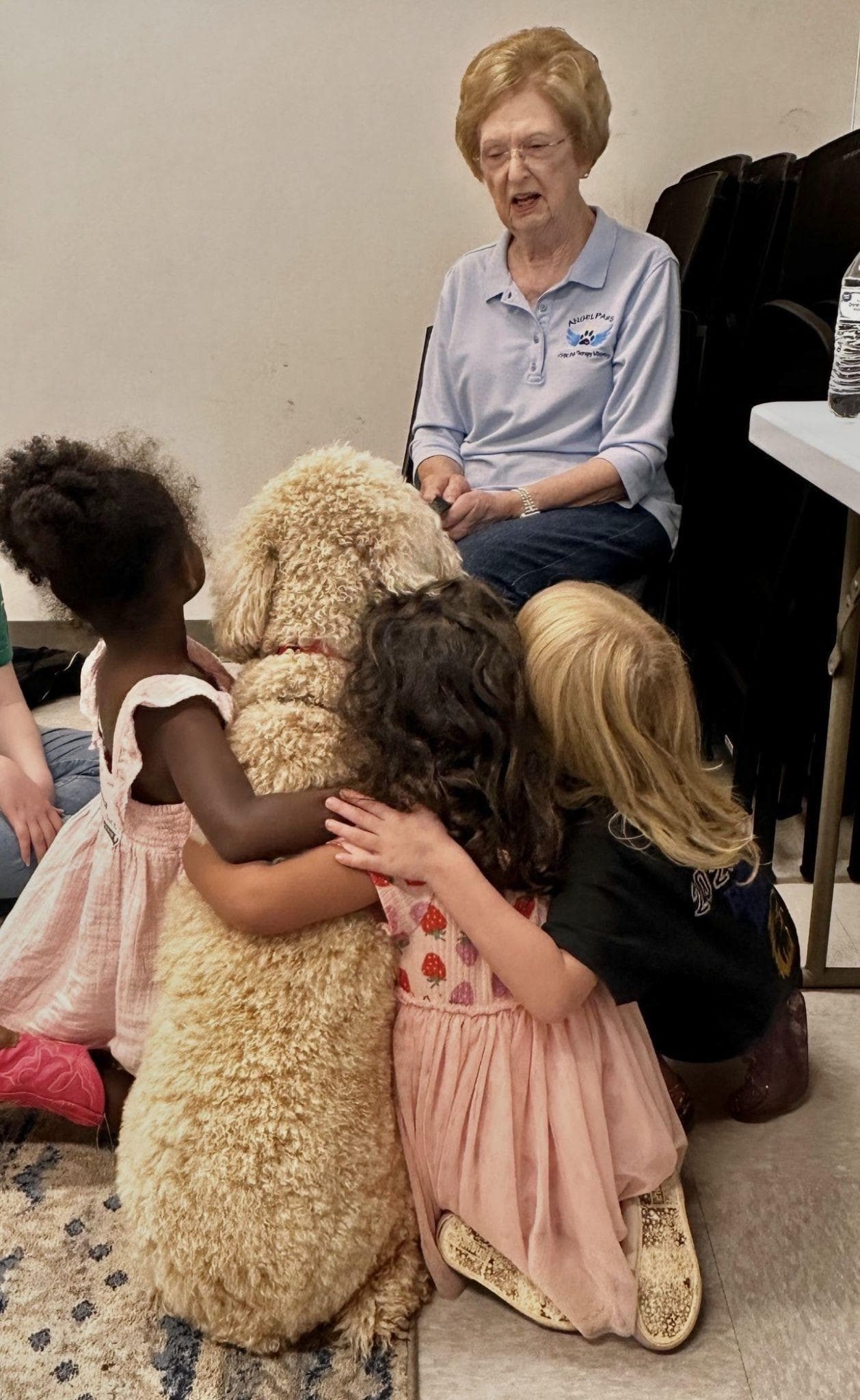
Connection without an agenda—just presence, patience, and a gentle spirit.
Why It Works
There's something about a dog that puts people at ease.
They don't expect anything.
They don't need conversation.
They don't bring pressure into the room.
That kind of presence can change how a person feels, even in a short visit.
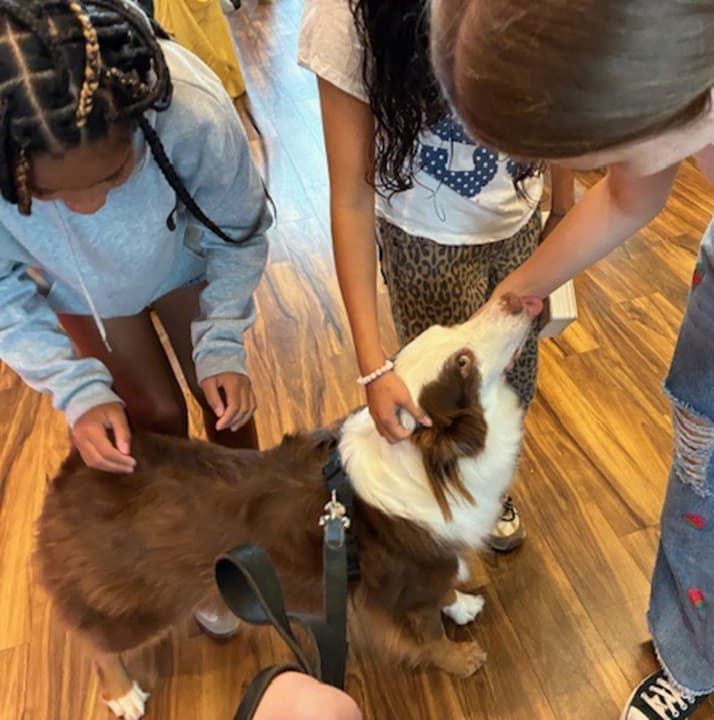
Clear Definitions
- Therapy dogs: trained to provide comfort and support in settings like schools, hospitals, care communities, and crisis response environments.
- Service dogs: trained for specific disability-related tasks for one handler.
- Comfort or crisis dogs: deployed in disaster and trauma contexts to support emotional care.
What We See Every Day
- Patients who relax during difficult treatments
- Students who gain confidence and focus
- People with reduced stress and lower anxiety in the moment
- People who simply feel less alone
You can see the difference almost immediately.
What are your safety policies?
Safety is our priority. Every dog is vaccinated, temperament-tested, and certified. We adhere to the policies of each facility, ensuring a professional and hygienic environment for all visits.
How does faith shape your work?
As a faith-based 501(c)(3), we believe a faithful dog carries the comfort Christ asks us to share. We love without agenda, offering prayer and presence wherever we are invited.
Policies & Procedures
To ensure the highest quality of service, Angel Paws teams follow a strict set of protocols:
- Certification: All dogs must pass a temperament evaluation and basic obedience test.
- Health: Up-to-date vaccinations and wellness exams are required annually.
- Conduct: Handlers are trained in active listening and proper hospital etiquette. To be a Reading Buddy in the schools, dogs are tested for their ability to remain still and calm while a student reads to them.
- Frequency: Teams typically visit for 1-2 hours at a time to ensure the comfort and health of the animal.
To learn more, read our full Policies and Procedures.
Want to learn more?
Read how we serve on Where We Serve, or reach out on Contact with a question.
Request a Visit